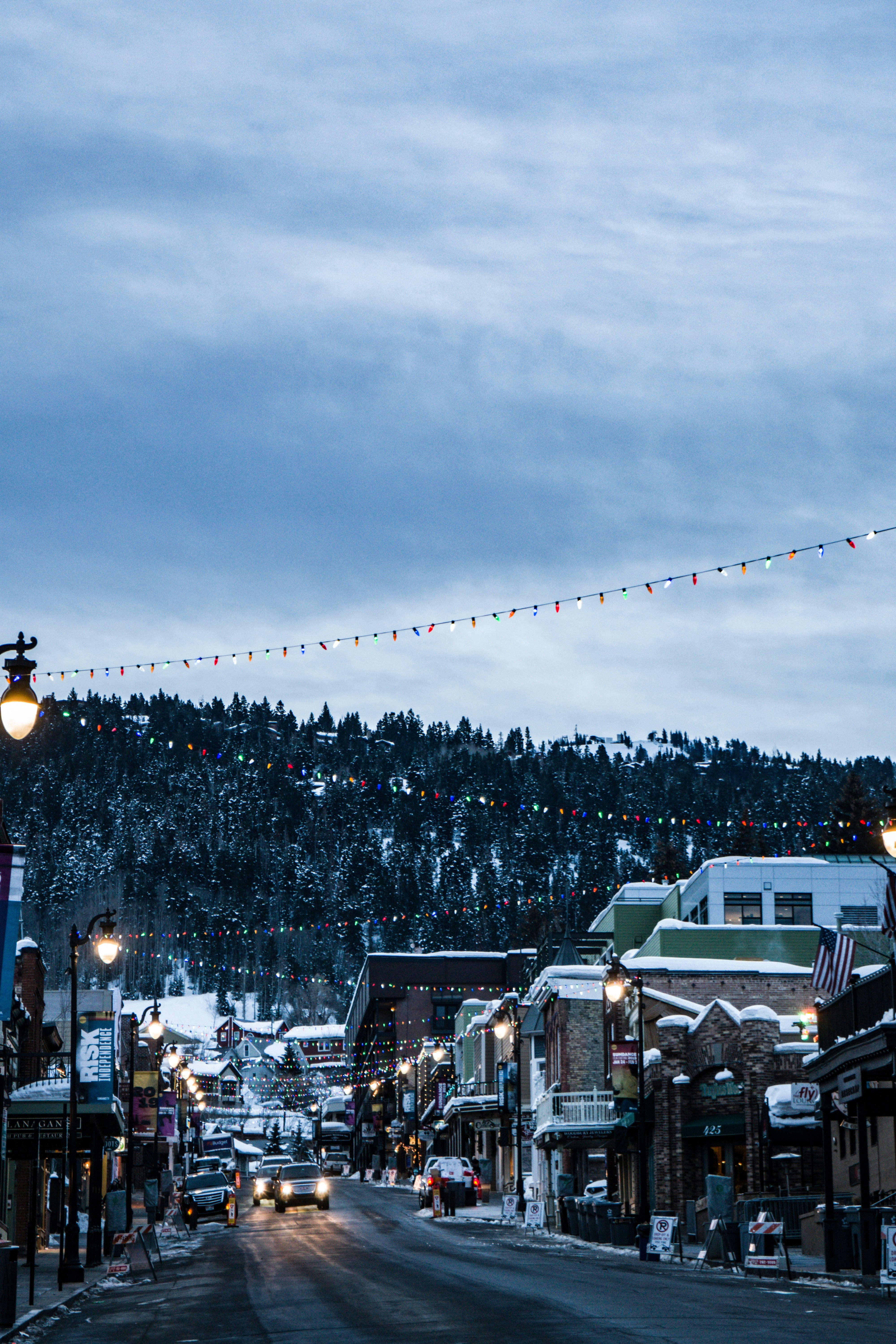
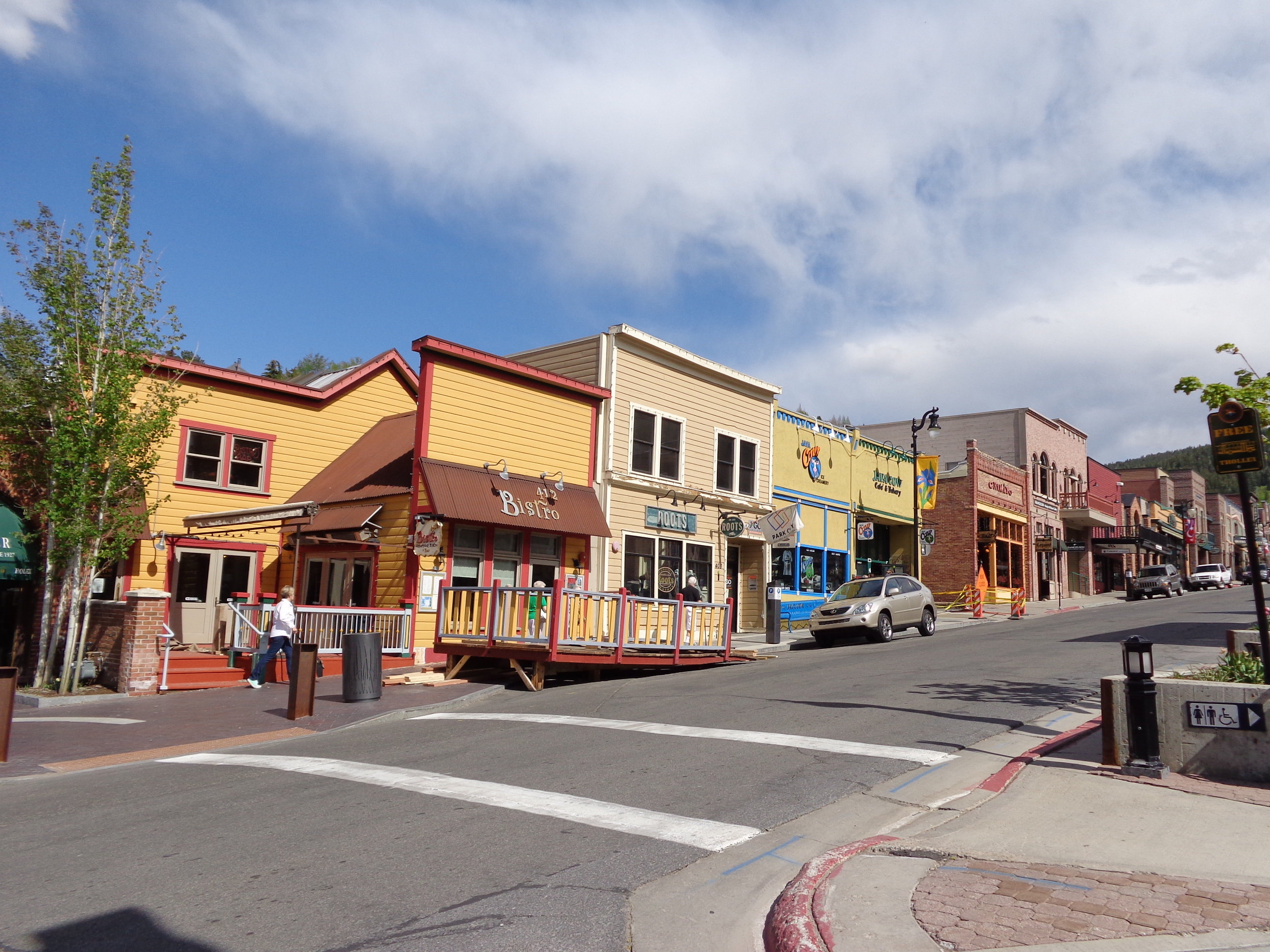
Whose plow truck — and whose heat bill? Condo vs. single-family winter carrying costs in Park City
Same ski town. Same first storm. Two very different winter bills.
If you’re comparing a condo or townhome to a single-family house in Park City, the kitchen-table question is not “which is cheaper on paper.” It’s this: are you buying a dues-bundled winter — where the association budget and CC&Rs decide who plows the private road, clears shared walks, and maintains the exterior — or an owner-ops winter, where heat, driveway snow, and roof monitoring mostly sit with your name on the invoice?
Mid-October is the right week to ask it. Park City’s high-tempo plow window runs roughly November 1 through April 30. Yesterday’s winter-medians literacy map told you how to read the season’s price story. Today’s map is carrying cost: what winter actually asks of this ownership type — read from the association budget and last winter’s owner invoices, not from a blog average.

Resort lodging architecture in Park City snow — a shared-building winter silhouette, not a unit for sale. Photo: Michelle Maria, Wikimedia Commons, CC BY 3.0.

Whose plow truck shows up — and whose name is on the heat bill?
Utah’s HOA Homebuyer Checklist (Office of the HOA Ombudsman) is the calm starting point. Property is common area, limited common area, or private. Dues and special assessments fund association-maintained items even when you don’t “own” them personally. The checklist asks what dues cover — landscaping, snow removal, trash, water, roads, pool, utilities, and more — and what you personally pay. Roof, yard, and deck may be limited common. Read the deed and the CC&Rs.
Under Utah’s Community Association Act pattern (§ 57-8a-224), the association generally maintains common areas; the lot owner maintains the lot — unless the declaration reallocates. Condo declarations (Title 57 Chapter 8) define unit vs. common element in that community’s language. Governing documents win over blog averages.
On a purchase file, the most recent minutes, budget, and financial statements are standard REPC seller disclosures. Snow line items and amenity costs live in the budget, not in a townwide “typical dues” table. If you’re comparing a condo stack to a house, count every association on the stack — some homes pay a master and a sub, each with its own dues and rules.
The condo / townhome path: read the winter budget
In many condo and townhome communities, higher dues often fund common-area snow on private roads and shared parking, building entries, exterior and roof when those are common elements, master insurance, amenities, management, and reserves. That is the dues-bundled winter story — when the documents and budget say so.
You still typically pay interior utilities, an HO-6 / contents policy, and often snow on a private entry or deck if the rules put those on the owner. Heat tape, heated walks, and roof contracts sometimes ride with the association; sometimes they do not. There is no citywide rule that the HOA always (or never) clears unit roofs. Pull this community’s winter rules and management scope.
Park City’s Building Department is clear on one boundary: CC&R enforcement runs through the HOA, not through Building. Registered associations get City notification forms for certain exterior work — that is a permit process, not the City interpreting your snow rules. For “who shows up after four inches,” management and the recorded packet are your first call.
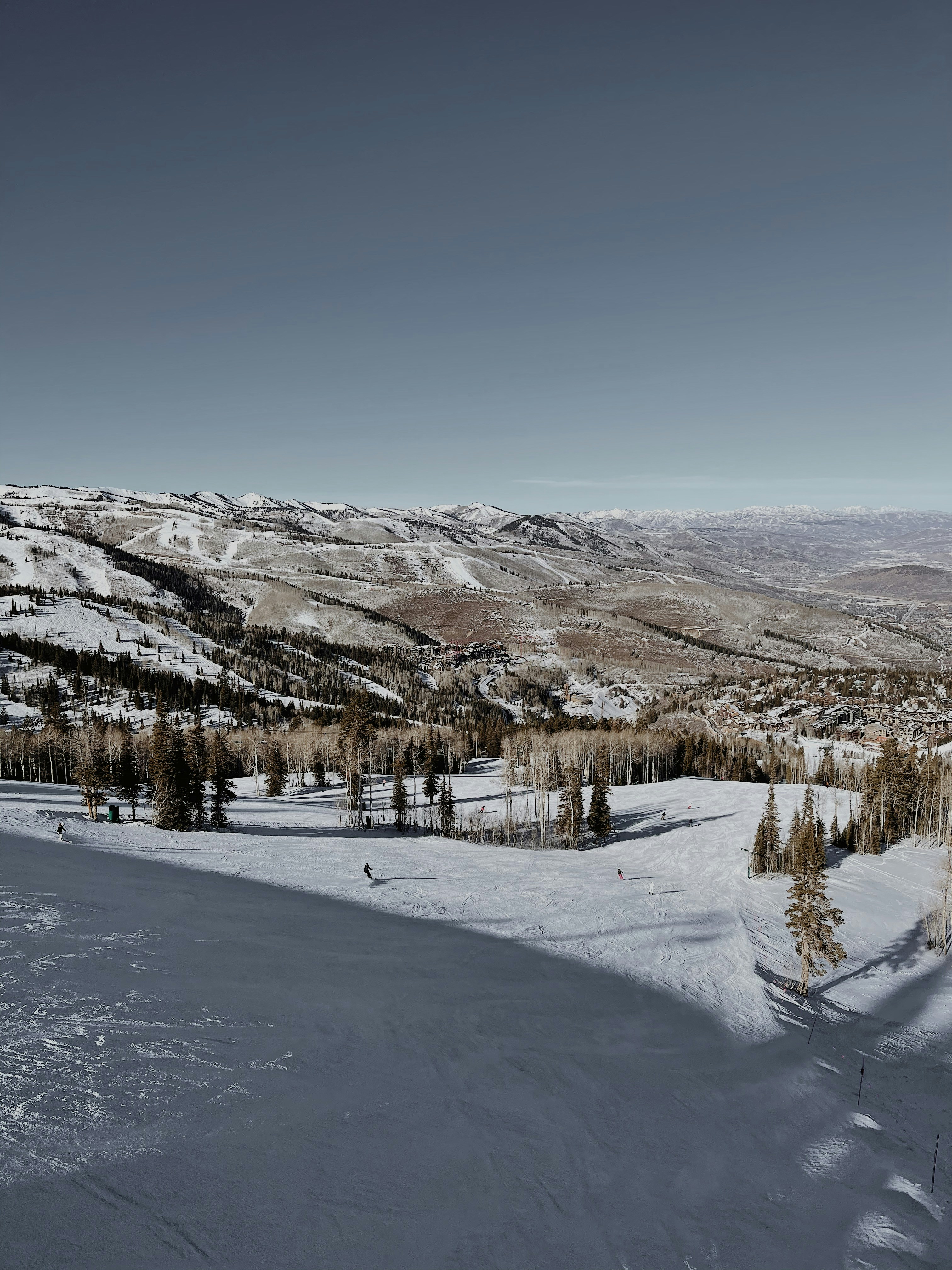
Park City / Deer Valley snow season — the same storms fill shared roofs and private driveways. Photo: Kyle Austin / Unsplash.
The single-family path: heat, driveway, and roof on you
Single-family ownership usually flips the map. If there is an HOA at all, dues may cover common roads, an entry, or limited amenities — or they may be higher in gated or club communities. Either way, the winter premium you feel day to day is more often owner-ops: whole-home heat, driveway and walk snow service, roof monitoring or clearing when needed, heat tape where it is installed, yard, and individual insurance.
Electric winter gets expensive in structure, not in a blog calculator. Rocky Mountain Power publishes Utah residential Time of Use energy charges (Schedule 1): for October through May, on-peak is 28.3924¢/kWh and off-peak is 6.3094¢/kWh, with on-peak weekdays roughly 6 p.m.–10 p.m. (weekends and holidays off-peak). The utility lists electric heating, heat pumps, space heaters, and heat tape among loads to shift off-peak when you can. That is rate literacy — not a blog estimate of your heat bill.
Many Park City addresses use Dominion Energy natural gas and/or Rocky Mountain Power electric; some sites use propane. The mix is parcel-specific. Pull last winter’s utility statements and any plow invoices for the comparable address — seller disclosures and account history beat a blog estimate every time.
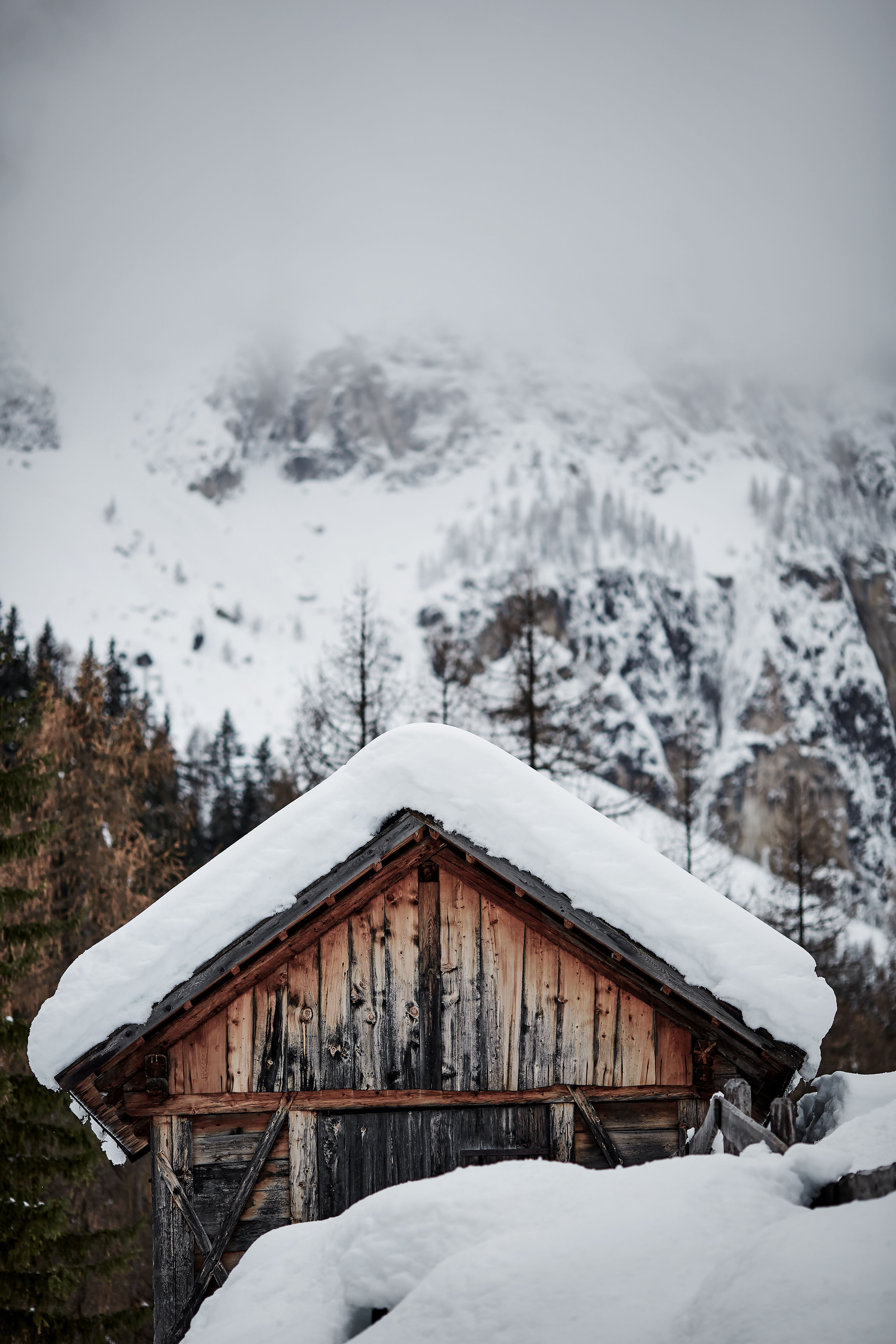
Cabin roof under mountain snow — illustrative single-family winter ops mood, not a listing. Photo: Pexels / Pexels License.
Rules both ownership types still share
Whether you buy dues-bundled or owner-ops, City and County snow rules still apply to the ground under your boots.
Park City Public Works and the Snow Removal Guide describe the municipal stack: crews ready Nov. 1–Apr. 30; priority routes then residential; Tier I / II / III sidewalks; private streets that associations and owners must clear to standards (commonly § 14-4-2 / § 14-4-3: a 20-foot width within eight hours after storms of four inches or more — nearer publish, re-open the live Municipal Code before you lean hard on any Snow Guide PDF excerpt). Do not push snow into the street. Keep hydrants clear.
On unincorporated Summit County or county-maintained roads, store snow on your own premises. It is unlawful to deposit private snow into the traveled public way (County Code 7-3-4 / 7-3-5). Start with Summit County snowplowing.
Roof snow load is a design fact, not a town slogan. Park City’s current Design Criteria 2026 still points residential applicants to the USU Utah Ground Snow Load Map — there is no single Park City psf number for a blog to quote. Know how your building was designed, watch for unusual accumulation, and use qualified pros when clearing is needed.
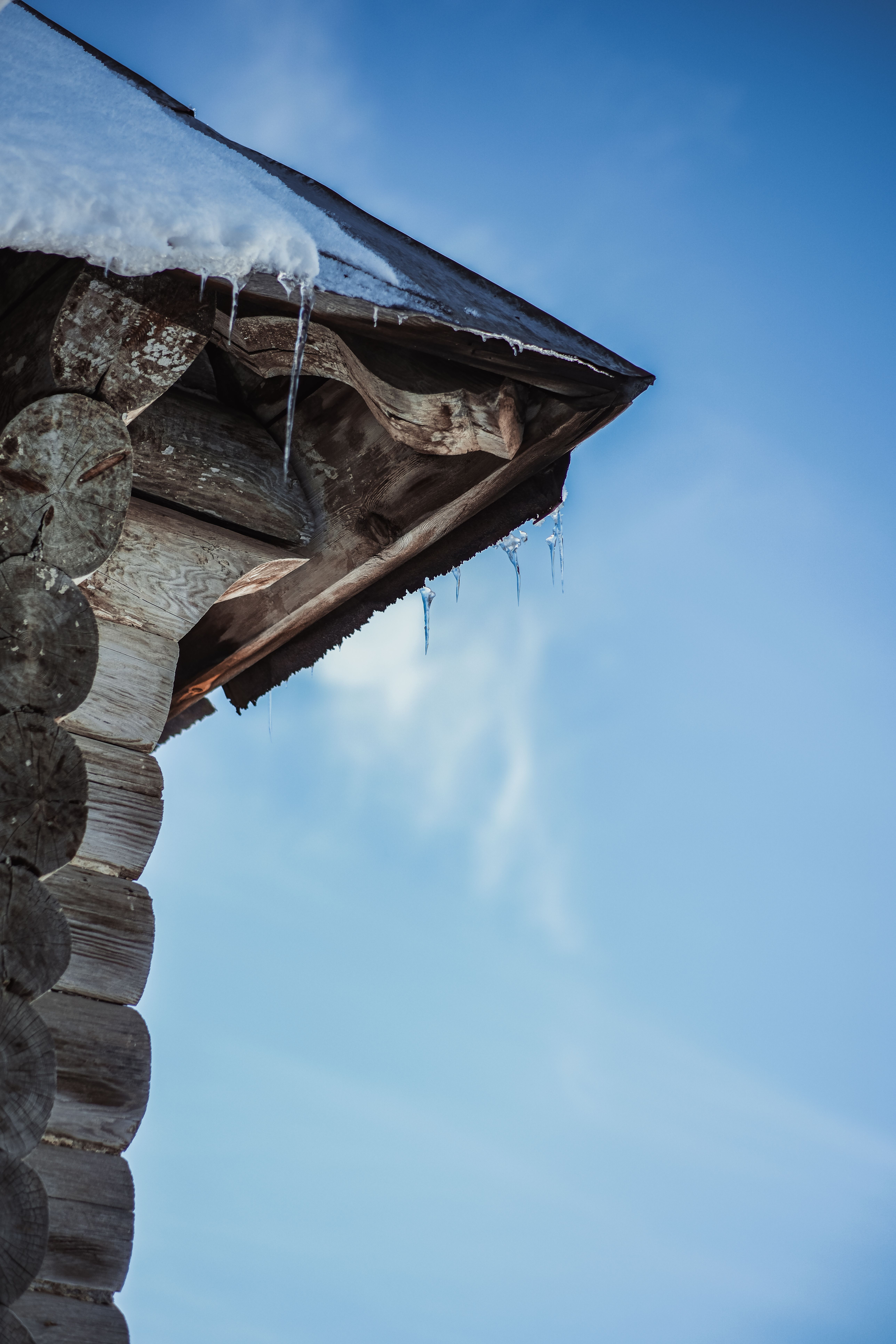
Snow on a cabin roof — roof load and owner-ops mood, not a listing and not a citywide load number. Photo: ORKUN SATICI / Pexels.
One more carrying-cost conversation that is not a dues table: Park City Board of Realtors quarterly notes have flagged rising insurance costs and fire-risk reclassification pressure in portions of Summit and Wasatch. That is direction of travel for owners comparing a condo stack to a house — not a premium quote. Confirm coverage and price with licensed insurance professionals on the file.
A winter-cost checklist before you choose
Before you favor the condo stack or the house driveway, put the documents beside each other:
- Pull this association’s budget, winter / snow rules, and CC&Rs — what line items cover snow, roof, exterior, and reserves?
- List every association on the address (master + sub) so you are not comparing one dues bill to none.
- For the single-family comparable: last winter’s heat / utility history, plow invoices, and who handles roof or heat tape.
- Confirm City sidewalk tier or private-street duty, or County on-site snow storage, for each address.
- Treat roof load as site-specific design plus a pro call — not a citywide “remove at N inches” tip.
- Ask insurance questions early if fire-risk classification may move the premium conversation.
None of this is legal, tax, or insurance advice. Recorded documents, Municipal and County code, utility rate pages, and licensed pros on the file control. Associations vary widely — skip any scraped “typical Park City dues” shortcut.
If you’re lining up a condo or townhome against a single-family winter and want a document-level cost map — budget and CC&Rs on one side, utility and plow history on the other — for the addresses you’re actually considering, I’m glad to walk the winter costs with you. No preferred vendors; confirm plow, roof, and insurance choices with the association manager and licensed professionals you choose.
Talk with Esteban J. Nunez — Park City Realtor.
Categories
Recent Posts