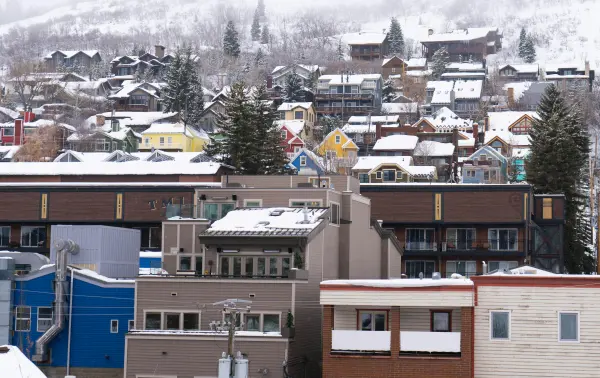
Where your boots go after last chair: Old Town vs Deer Valley base living
Two sets of keys. One points toward Main Street. The other points toward Snow Park Lodge.
Late October is when the ski-week brochure fades and a quieter question shows up: after last chair — or on a Tuesday you’re not skiing at all — where do your boots actually go? Historic Old Town and the Deer Valley Snow Park base can both work as winter addresses. They are not the same winter living.
This is a walkability, doors, and grocery map. It is not a mid-mountain vs upper-mountain ski-week ranking, and it is not the Kimball Junction stock-up essay. If you want the Main Street event calendar, that lives in a different post. Today is everyday winter living.

Old Town Transit Center — the free-transit hinge between Main Street living and resort bases. Photo: An Errant Knight, Wikimedia Commons, CC BY-SA 4.0.

Walkability is logistics — not a vibe
Old Town wraps Historic Main Street. Depending on your block and elevation, cafés, galleries, restaurants, and nightlife can sit within a short walk. That is the in-town living people mean when they say they want winter nights without getting back in the car.
It is also a winter walk with friction. Streets are steep. Ice and snow berms show up. Car-light is more realistic than fully car-free for most addresses. Parts of Park City’s walking and biking network are plowed in winter — not every path equally — so the walk you love in September is not automatically the walk you get in January.
Snow Park is a different walk story. Deer Valley’s own lodging materials describe Snow Park as the main resort entrance and base area, with lodging from hotel rooms to multi-bedroom homes, access to Snow Park Lodge, Carpenter Express and Silver Lake Express on Bald Eagle, and the Wide West beginner area. Dining on the resort page includes Deer Valley Café, The Brass Tag, Snow Park Restaurant, and Cast & Cut. Resort copy also markets many properties as within about a mile of Historic Main Street — treat that as proximity marketing, not a stopwatch.
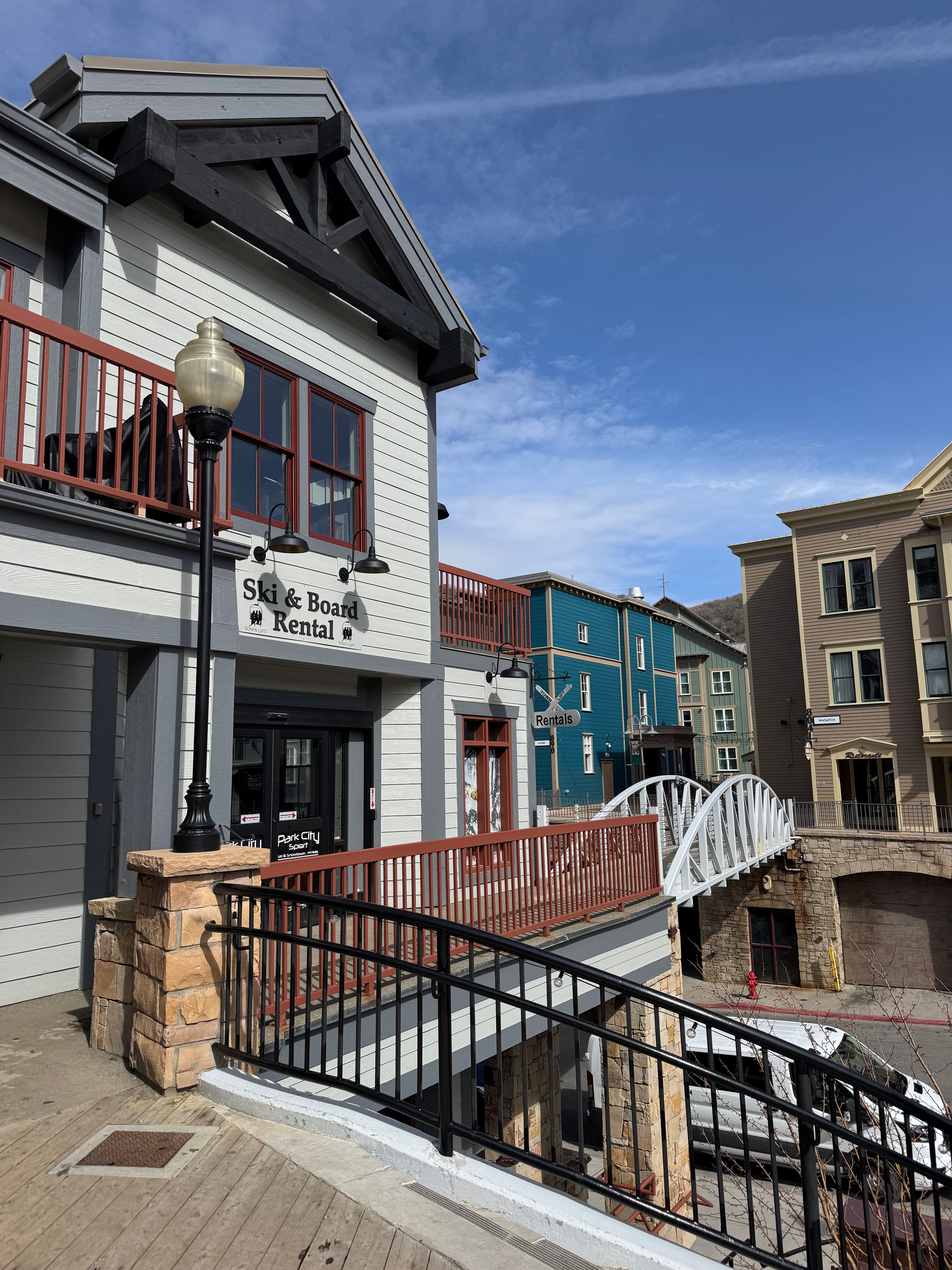
Historic Main Street storefront energy — walkability as winter living, not a listing. Photo: Petra Nesti / Pexels License.
The doors: Main / Town Lift vs Snow Park Lodge
Think in doors, not neighborhood slogans.
An Old Town door usually opens toward Main Street, the Town Lift corridor, or the Old Town Transit Center. Ski access is often a walk or a short free-bus hop to Park City Mountain’s Town Lift / Mountain Village side; Deer Valley is reachable on free Park City Transit. Your Tuesday night is more likely restaurants, galleries, and a street calendar than a lodge lobby.
A Snow Park door opens toward Snow Park Lodge, the ski-school campus, and base lifts. Many ski-in/ski-out options sit in that lodging stack — Deer Valley inventory language often qualifies access as conditions permitting — and Deer Valley Lodging guests get complimentary in-town/resort transport through the DV Direct app. Some addresses walk to a complimentary skier-parking shuttle. Main Street is a walk for select buildings, a DV Direct ride, or a free PCT ride for others.
Access is building-specific. Never blanket “Old Town is ski-in” or “every Snow Park door is walk-to-lodge.” Tour the door you would actually use at 8 a.m. and at 8 p.m. — and if a listing says ski-in/ski-out, ask for that building’s access language in writing and walk the snow path yourself.
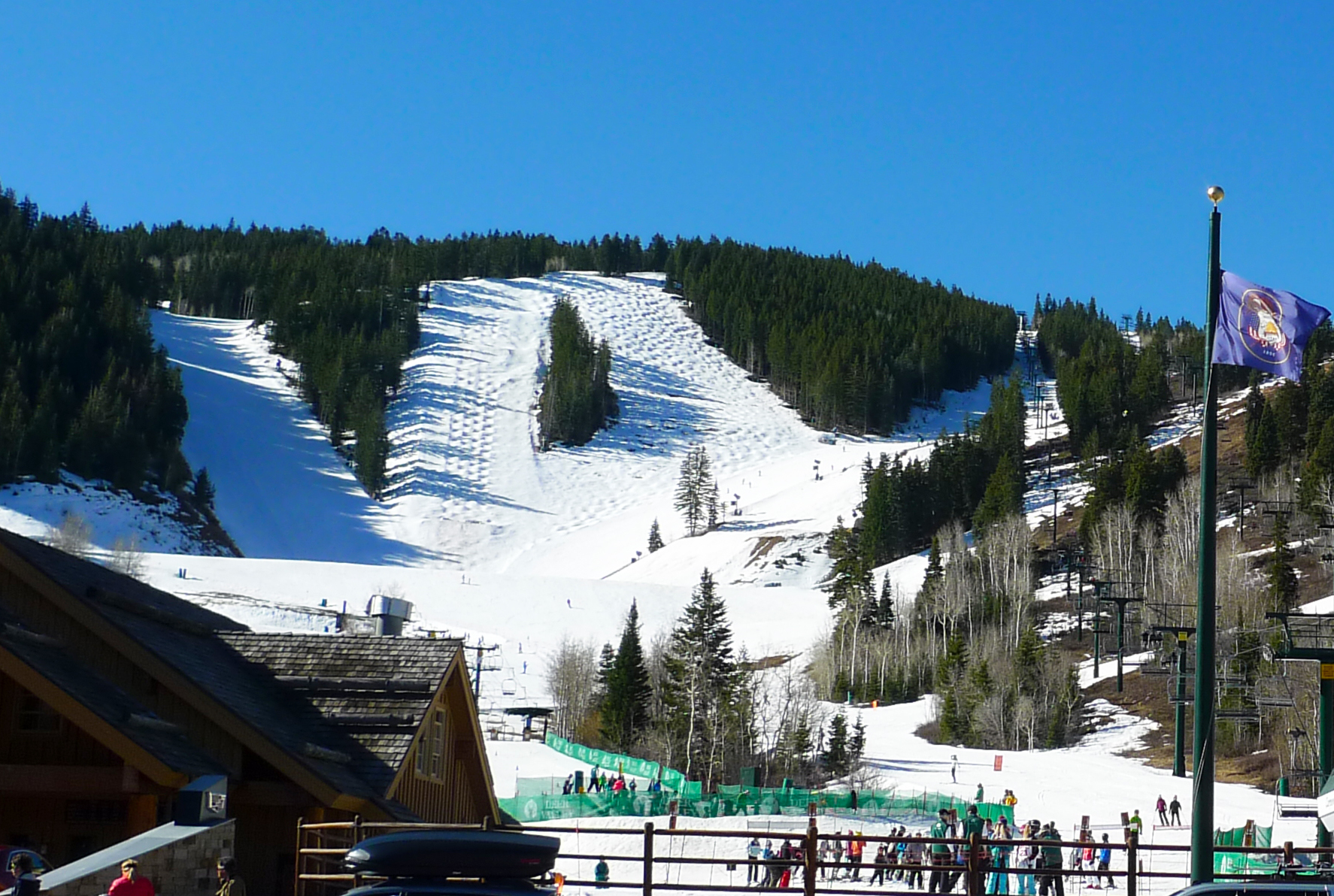
Deer Valley snow — Snow Park base living starts at the lodge door, not mid-mountain Silver Lake. Photo: Don Ramey Logan, Wikimedia Commons, CC BY 4.0.

Grocery: Fresh Market + transit vs lodge dining + a stock-up hop
If you’re living Old Town most nights, the near-in grocery stop is Fresh Market Park City at 1760 Park Avenue — hours listed Mon–Sun 6 a.m.–12 a.m. on the store locator (confirm the morning you shop). It sits on free-transit corridors that historically serve Prospector, Park Avenue, Mountain Village, and Main.
Weekly big-box stock-up is still often a Prospector cluster run or a basin hop. That deeper Landmark Drive / Kimball Junction grocery map belongs in the Kimball winter-base post — we don’t need to reprint it here.
Snow Park living leans lodge dining for ski days, then a transit or short drive hop when you need a real grocery cart. That is logistics, not a lifestyle tribe. Ask yourself honestly: how often do you cook a full week of meals at altitude, and how often do you eat where the boots already are?
What free transit actually connects
Park City Transit is fare-free. The Old Town Transit Center is a major timepoint linking Main Street, Mountain Village, Deer Valley / Snow Park, and Prospector Square. Published route patterns — including the 1 Red and related Yellow/Green combinations — put Snow Park Deer Valley, Old Town Transit Center, Park City Mountain, Fresh Market, and The Prospector on usable winter rails.
Last winter’s published Deer Valley corridor pattern — Park Meadows/Thaynes to Snow Park via the Old Town Transit Center — ran about every 15–30 minutes on the Winter 2025–26 times PDF. Shared timepoints can feel tighter when routes stack. Treat that as last season’s pattern, not this year’s promise. Confirm the 2026/27 winter schedule on Routes & Schedules (and on myStop) before you plan a car-light week — the full winter overlay map is a different fridge card. The living-map point is simpler: a Snow Park door can still reach Fresh Market without treating a car as automatic, and an Old Town door can still reach Snow Park without pretending every address walks to Deer Valley.
Winter grades and weather — walkability is real and weather-dependent; describe the walk, don’t romanticize ice. Photo: Unsplash / Unsplash License.
Property-level access, not neighborhood myths
Two honest filters before you fall in love with a pin on the map:
- Door test: From the unit door, what is the first useful destination — Main Street, OTTC, Snow Park Lodge, a bus stop, or a garage?
- Non-ski evening test: Where do you eat, restock, and move around when lifts are closed and you are not on vacation mode?
Ski-in/ski-out claims, walk times, and “minutes to Main” marketing all need address-level diligence. Ice, grade, and storm berms change the same sidewalk week to week. Nightly-rental and HOA rules are building- and jurisdiction-specific — pull the packet for the address, not a townwide assumption.
If you’re weighing an Old Town winter address against a Deer Valley Snow Park base address — doors, transit stops, and grocery rhythm against how you actually spend a non-ski evening — I’m glad to line those three rails up for the buildings you’re touring. No preferred vendors; confirm bus times on myStop and access language in the listing docs.
Talk with Esteban J. Nunez — Park City Realtor.
Categories
Recent Posts